
PLUG by NG3
Overview
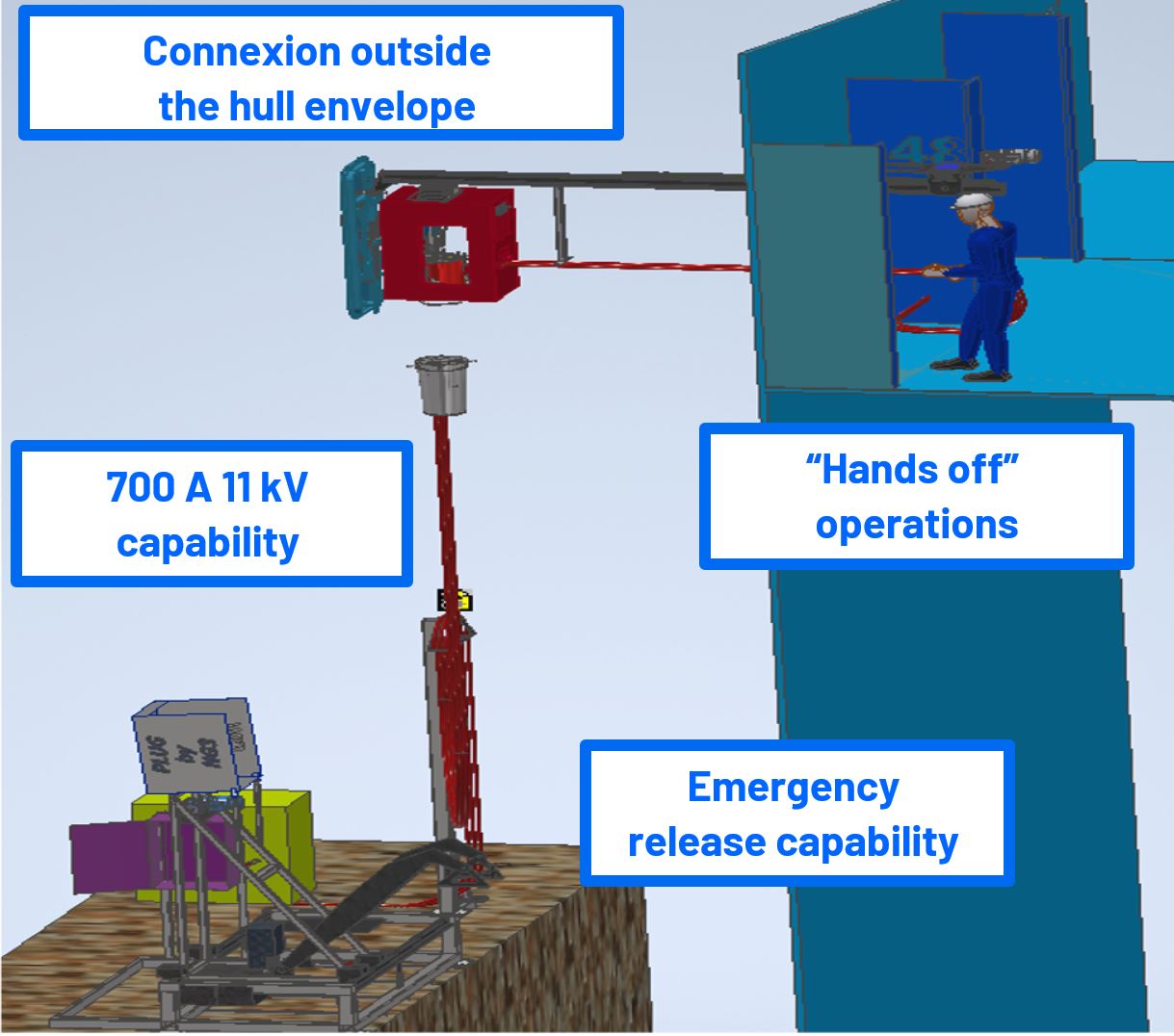
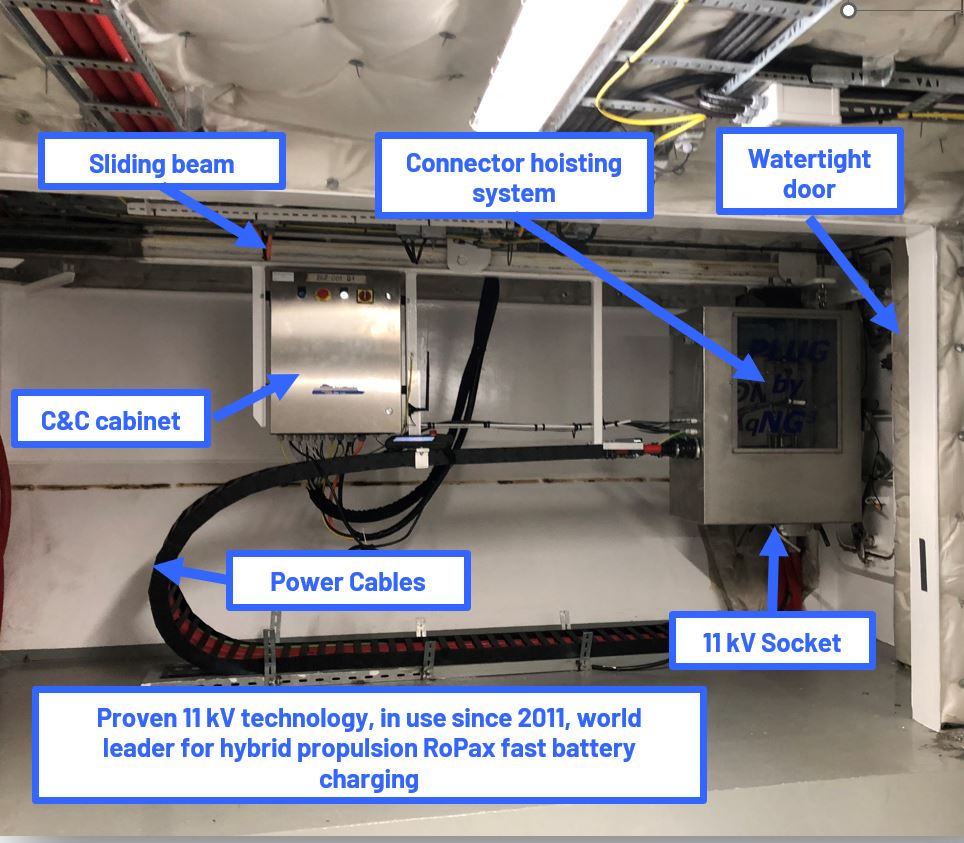
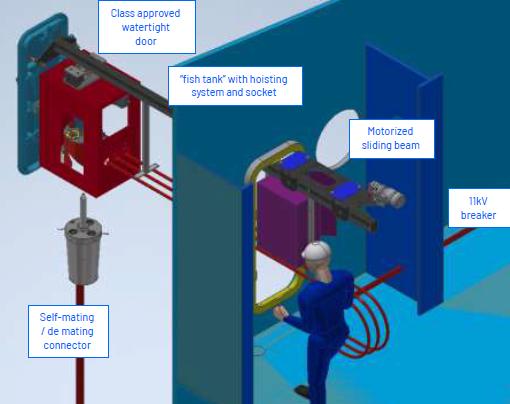
As soon as the vessel is secured alongside the quay, the crew has just to slide out above the quay a beam to which is attached the ship side power socket and lower down a chain toward the quay side connector.
The chain is equipped with a hook, which is inserted into the quay side self-mating connector. Getting further down, inside the connector, the hook gets locked with the connector.
The quay side connector can now be hoisted towards the ship side socket.
Benefits
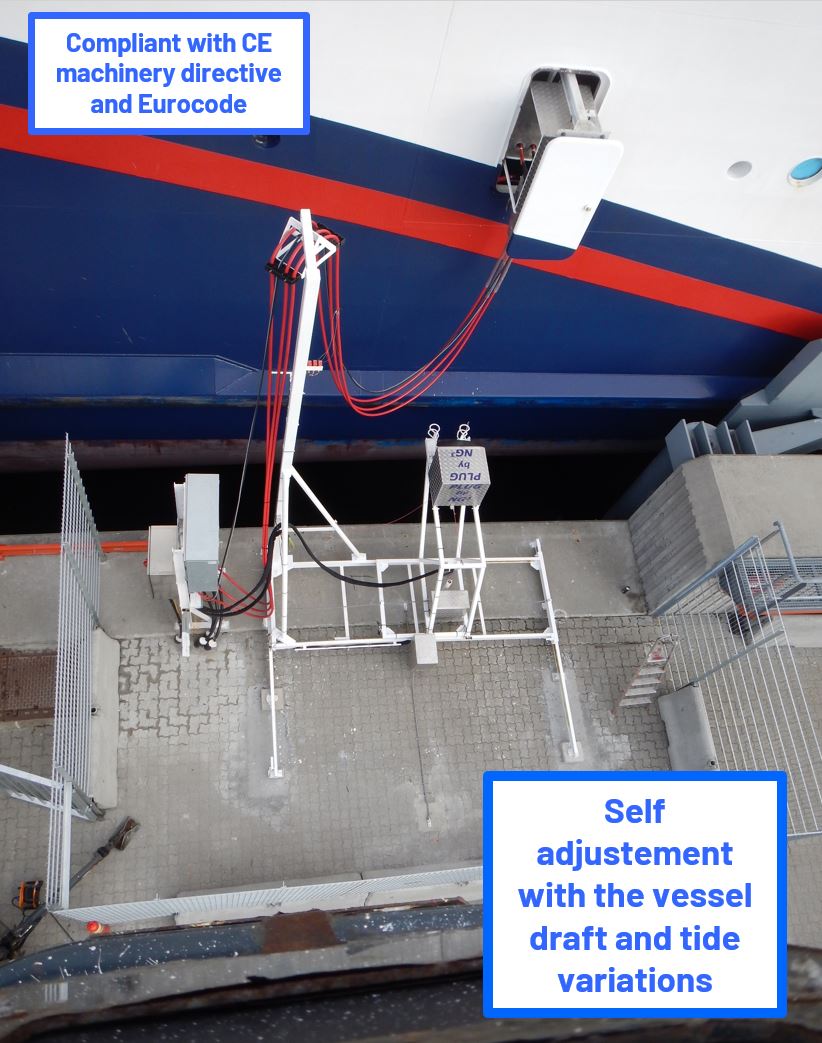
- Compatible with large tide variations
- “Hands off” operation
- No handling of power cables
- Operation by a single crew member
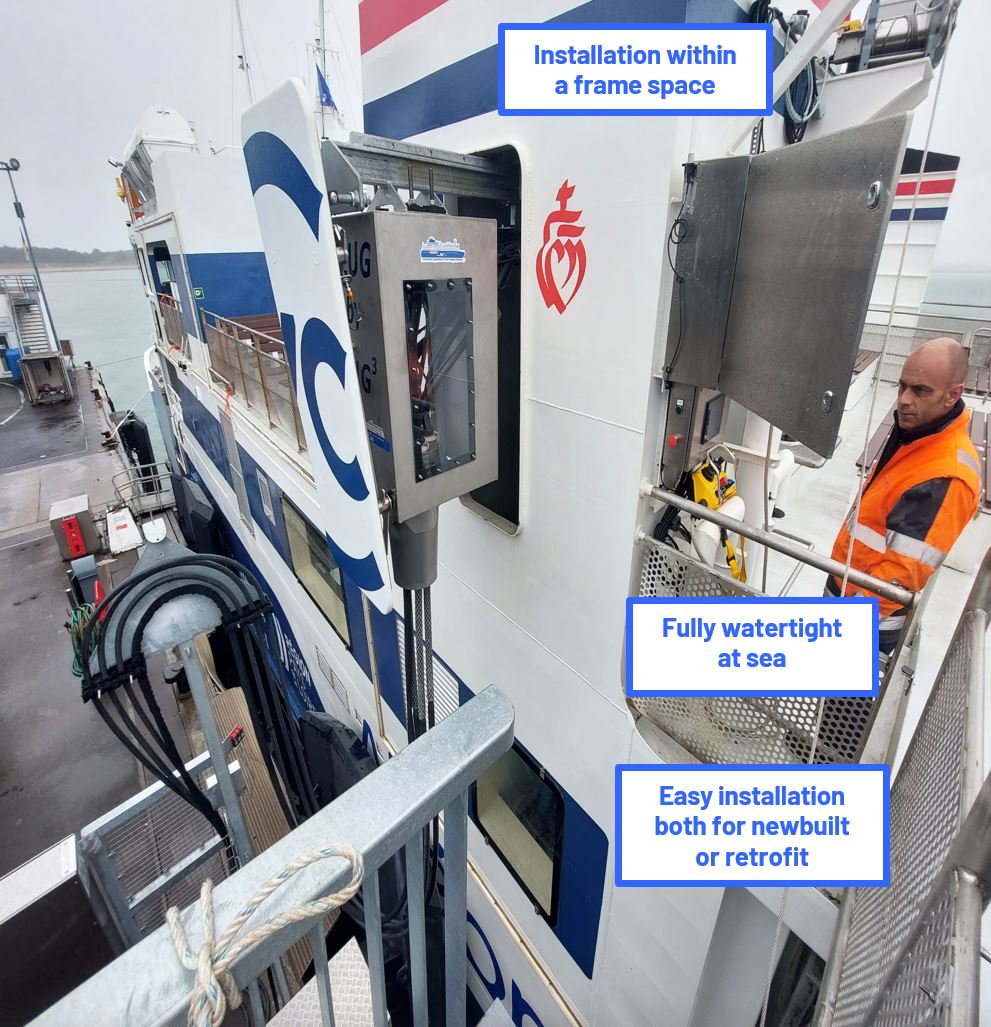
- Compactness onboard
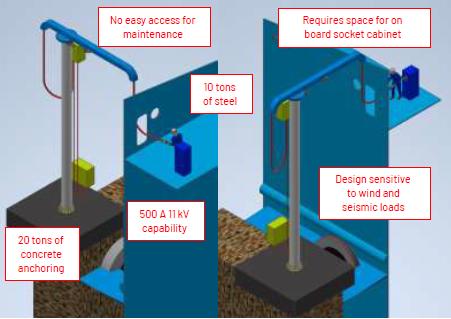
- No harbour engineering
- Installation within a week
- Connection in 1 min after docking
- Automated emergency release
- Compatible with arctic conditions
Options
- Automated operations for short crossing ferries
- Combined with automated mooring
Technical features
General features
| Class approved | Yes |
| IEC 80005 general requirements | Compliant |
| CE marked | Yes |
| Hands off operations by a single crew member | Yes |
| Emergency release capability | Yes |
| Compatible with large tide/ draft variation | Yes |
| Connection time | 1 min after docking (typical) |
Electrical features
| Power exchange capability | 11 kV/ 700 A or 1 kV/ 2000 A |
| Connector | 3 phases + 6 pilot pins |
| Aux power required | 4kW at 230V |
| Operation | Remotely from a tablet |
Mechanical features
| Alignment along the quay | From 1 meter to 15 meter |
| Tide and deck adjustment | Fixed point on a mast for cables to compensate tide, draft and deck variations |
| Ship side mechanical interface | 8 M20 bolts |
| Quay side mechanical interface | 24 M20 bolts (no concrete foundation needed) |
| Class approved watertight door | Included |
PLUG in details